The Worth of a Challenge


If you give a child a fish, you feed him for a day.
If you teach a child to fish, you feed him for a lifetime.
But if you teach a child to learn, you feed him for a lifetime
and he doesn't have to just eat fish.

Showing posts with label charactor. Show all posts

Sunday, September 18, 2011

Sayings Week 3: "Look Before You Leap"


           This is a great lesson of cause and effect and also about thinking through what you want to do before you do it.  To make it fun we used our marble run pieces and made a tube and tried to get the marbles into a tub. This required a lot of forethought on their part. The moved the tub around and then they tried to find just the right spot for the tube so it wouldn't move when they released the marble. You can do this too at home with a tube from wrapping paper or a couple of paper towel rolls and a tub of any size. The goal is to get the kids to think things through and to know that they can change things to make it right if it doesn't work out.

In phase 1 Benji stayed at the top of the marble run and Jacob adjusted the bin so it would work right
 *please ignore the clutter in the background!
 Phase 2: They could both drop marbles from the top of the run. That tiny blue speck below the marble run is the marble on it's way to the tub. They were so thrilled they ran marbles for about an hour!
How do you teach your child to look before they leap? I would love to know what you do so don't forget to leave a comment!

Thursday, September 1, 2011

Sayings: week 1

Each week we will learn a common saying. This weeks saying is:
"A dog is man's best friend"
We talked about how a dog could be man's best friend and why it is a common saying. Then we drew pictures of a dog. A simple lesson and yet when the children hear others use these sayings, they will understands.

Tuesday, August 30, 2011

8 Keys Lesson 1- Integrity


Every week we will be developing our character with the program The 8 Keys of Excellence. It consists of eight keys or values. The program is free which is also great and can be found at their webstie http://8keys.org/. We will start each month with a key and work on learning it each week. Each Key has a body motion, definition and affirmation. I also like to find a small story or anecdote that would further reinforce the "key". I then write the word integrity (or what every key we are on) on a picture of a key and hang it up in the classroom. Here is a sample from the webstite:


INTEGRITY – Match behavior with values
Demonstrate your positive personal values in all you do and say. Be sincere and real.
Living in integrity means that everything we say and everything we do are true reflections of what we value, what’s important to us. Think about what your behavior says about you. Does it clearly show others what you value? Do you show up as honest and committed, or dishonest and indifferent? Are you spending your time with the people and activities you value, or is your focus elsewhere?
When we live in integrity we are sincere and true to ourselves—we don’t say or think one thing and do another. People trust and respect us, our relationships are solid, and we feel good about ourselves. Those positive feelings from others and within ourselves reinforce our values and build our reputation and self-esteem, leading us to greater success in all areas of our lives.
Affirmations:
Middle School/High School: I do the right thing. Elementary School: I do the right thing. Primary School: I do what’s right—even when no one’s looking.
Body motion: Hands together over head (V-values, B-behavior).


Over all, it's a great program, it is virtually cost free and only requires our time, but isn't that what teaching and parenting is about


Wednesday, March 9, 2011

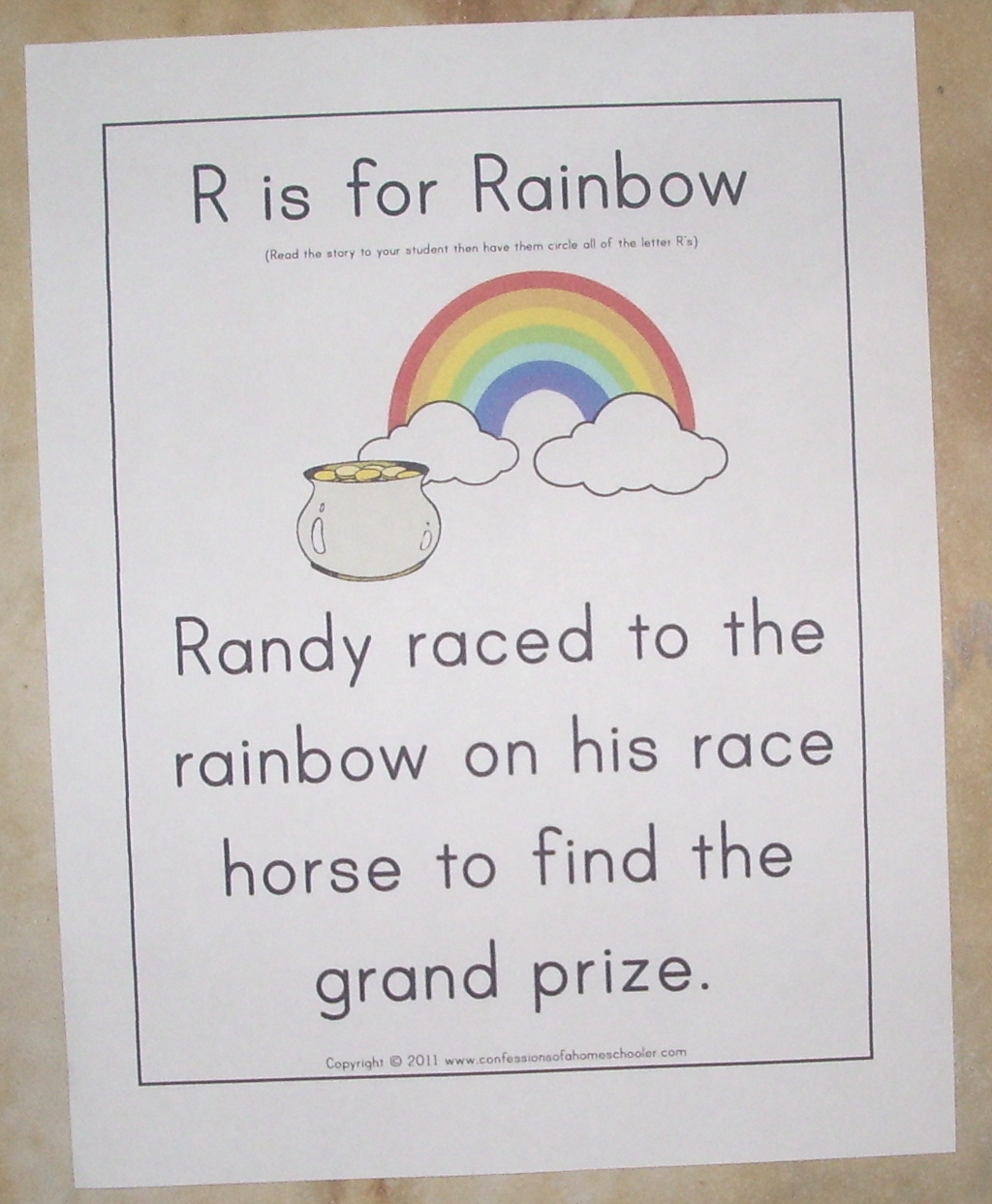
I like to look for rainbows.....


This year for Sunday school/primary, one of the songs the kids are learning to sing is called "When I Am Baptized". The song is as follows:

I like to look for rainbows when ever there is rain


and ponder on the beauty of an earth made clean again.

CHORUS:
I want my life to be as clean as Earth right after rain
I want to be the best I can,
and live with God again.

I know when I am baptized my wrongs are washed away,
and I can be forgiven and improve myself each day.

CHORUS


I love the sentiment of the rainbow and how just like it was God's promise to Noah, it can be a promise unto us that if we can be clean and good "like earth right after rain" that we can live with God again. 


With this song in my heart I decided to make this the theme of today's learning.

I got a wonderful flip chart from sugardoodle. I used the one by Jolly Jen, but both of them work and both are filled with beautiful pictures to help your child learn the song.

We will sing along with this wonderful version I found on youtube:


We will read two books about rainbows:


We will hunt for letter Rr's *

We will sort upper and lower case Rr's*

We will line up the rainbows largest to smallest, smallest to largest and learn 1st, 2nd, 3rd, etc.*

We will learn how to spell the word rainbow*

We will color the number 24 Car from Nascar which is traditionally in a rainbow theme.

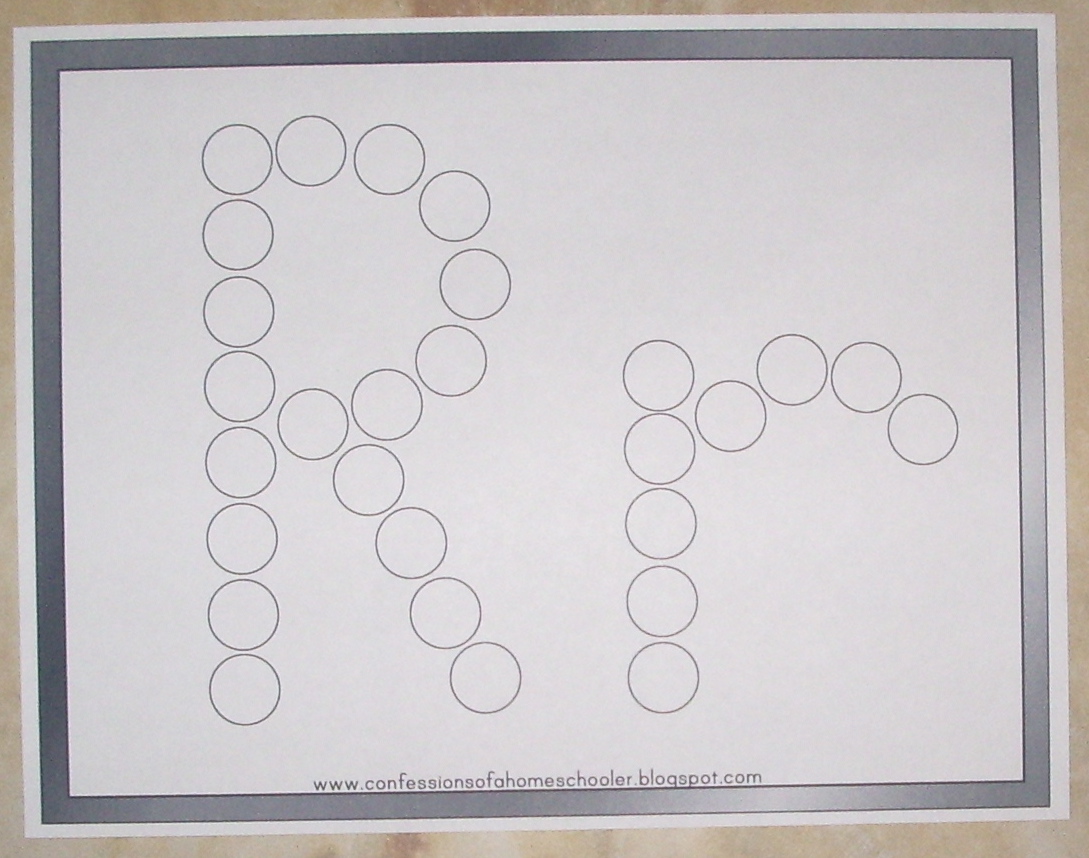
We will do-a-dot the letter R*

We will also graph rainbows*


We will also have centers set up so they can find how many different ways they can make rainbows using different materials.

  • little vehicle counters
  • buttons
  • bottle caps
  • play food like ice cream and the felt fruits and veggies
  • beads
  • legos
  • linking cubes


We will also have this lesson on preparing to be baptized. I don't do a lot of "theme" lesson days, but this one left an impression on me that we should do this lesson at this time.


*All of these activities can be found at confessions of a homeschooler

Tuesday, March 8, 2011

Home Economics: Bread(white)


You don't have to be a pimple faced teen in junior high(or high school) to learn skills that will help you in at home. We made this awesome bread that took just a few ingredients and and a few steps and was delicious. I got my recipe from the February 2010 issue of Martha Stewart Living. Thank you Martha, this bread is so easy and yummy and my kids get wonderful knowledge and experience from helping me make it.


The recipe:


  • 1 tablespoon plus 1 1/2 teaspoons active dry yeast (two 1/4-ounce envelopes)
  • 2 1/4 cups warm water (110 degrees)
  • 3 tablespoons plus 2 teaspoons honey
  • 4 tablespoons unsalted butter, melted, plus more for bowl, pans, and brushing
  • 7 cups all-purpose flour, plus more for surface and dusting
  • 4 teaspoons coarse salt

Step 1

Sprinkle yeast over 1/2 cup water. Add 2 teaspoons honey. Whisk until yeast dissolves. Let stand until foamy, about 5 minutes.

Step 2

Transfer to the bowl of a mixer fitted with the paddle or dough-hook attachment. Add butter and remaining 1 3/4 cups water and 3 tablespoons honey. Whisk flour with salt; add 3 cups to yeast. Mix on low speed until smooth.

Step 3

Add remaining 4 cups flour, 1 cup at a time, mixing until dough comes away from sides of bowl and forms a ragged, slightly sticky ball. Butter a large bowl

Step 4

Knead dough on a floured surface until smooth and elastic but still slightly tacky, about 5 minutes.

Step 5

Shape into a ball.

Step 6

Transfer to prepared bowl; cover with plastic wrap.

Step 7

Let dough stand in a warm place until it doubles in volume (it should not spring back when pressed), about 1 hour.


Step 8

Butter two 4 1/2-by-8 1/2-inch loaf pans. Punch down dough.

Step 9

Divide in half.

Step 10

Shape 1 dough half into an 8 1/2-inch-long rectangle (about 1/2 inch thick). Fold long sides of dough in to middle, overlapping slightly. Press seam to seal. Transfer dough, seam side down, to pan. Repeat with remaining dough.
* I run a knife down the middle of mine and drizzle honey on the slit 

Step 11

Brush each loaf with butter, or dust with flour for a rustic look.

Step 12

Preheat oven to 450 degrees. Drape loaves with plastic. Let stand until dough rises about 1 inch above tops of pans, 45 minutes to 1 hour. Reduce oven temperature to 400 degrees. Bake, rotating pans after 20 minutes, until tops are golden brown, about 45 minutes. Transfer to wire racks. Let cool slightly; turn out loaves. Let cool completely before slicing.


Things to do with the bread:
  • make toast
  • make french toast
  • cut thin and use to make sandwiches
  • use to make bread pudding
  • eat warm with butter and honey
  • share a loaf with others


Saturday, March 5, 2011

The Ugly Duckling- A literature Lesson

For literature we read the story of The Ugly Duckling by Hans Christian Anderson. This story is very dear to me and am so glad my children loved it too. I love how my kids understood that everyone needs love and that everyone is special.


We read the story together(I found some really neat printable visual aids here)
After the story we did a story map, drawing pictures of what happened at the beginning, middle and end.

We learned about grammer. I chopped up some sentences and then had the children put the words into the right order with the sentence starting with a capital letter and ending with a period.

We made a "literature word wall". We picked words from the story and put them on to a folder. And then practiced writing them. We will continue to add new words with each story we read.

Other activities we did:
  • play duck, duck goose
  • sing the song "six little ducks"
  • we talked about feelings and about how it isn't ok to tease others.

Wednesday, November 17, 2010

self haircut!

So I went upstairs to check on a very quiet Jacob and found out that he had given himself a haircut. He had gotten the scissors out of the classroom/playroom and went into the bathroom, used the mirror and trimmed a little in front.

It really could have been worse and actually I was quite proud of him telling me the truth of what happened even though he was afraid of what mommy and daddy might think.

Tuesday, November 16, 2010

Never ending creativity

When I wonder what Jacob will be when he grows up, it doesn't take me long to think of a few options
He could easily be a lawyer with his not stop efforts to make things go his way, or a cinematographer because of his love to make "movies" and set up camera angles or he could work in marketing because he loves to make things and then set up his own store complete with commercials.....I love that he dreams this stuff up. It's amazing to me how limitless the child's imagination is.

here he is with the advent calendar he made


and here are the transformers ready for their film debut with Jacob as director

Thursday, November 11, 2010

Happy Veteran's Day!

Wishing everyone a Happy Veteran's Day. May we always remember those who served and gave that we might have the liberty that we as Americans expect as rights.


http://www.foundingfathers.info/stories/gadsden.html
by Chris Whitten, July 5, 2001, updated September 2002


Don't Tread on Me


American unity

Benjamin Franklin is famous for his sense of humor. In 1751, he wrote a satirical commentary in his Pennsylvania Gazette suggesting that as a way to thank the Brits for their policy of sending convicted felons to America, American colonists should send rattlesnakes to England.
Three years later, in 1754, he used a snake to illustrate another point. This time not so humorous.
Franklin sketched, carved, and published the first known political cartoon in an American newspaper. It was the image of a snake cut into eight sections. The sections represented the individual colonies and the curves of the snake suggested the coastline. New England was combined into one section as the head of the snake. South Carolina was at the tail. Beneath the snake were the ominous words "Join, or Die."
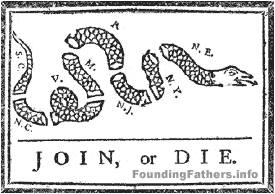
Franklin's Join or Die snake woodcut
[Benjamin Franklin's woodcut from May 9, 1754.
Newspaper Serial and Government Publications Division,
Library of Congress.]
This had nothing to do with independence from Britain. It was a plea for unity in defending the colonies during the French and Indian War. It played off a common superstition of the time: a snake that had been cut into pieces could come back to life if you joined the sections together before sunset.
The snake illustration was reprinted throughout the colonies. Dozens of newspapers from Massachusetts to South Carolina ran Franklin's sketch or some variation of it. For example, the Boston Gazette recreated the snake with the words "Unite and Conquer" coming from its mouth.
I suppose the newspaper editors were hungry for graphic material, this being America's first political cartoon. Whatever the reason, Franklin's snake wiggled its way into American culture as an early symbol of a shared national identity.

American independence

The snake symbol came in handy ten years later, when Americans were again uniting against a common enemy.
In 1765 the common enemy was the Stamp Act. The British decided that they needed more control over the colonies, and more importantly, they needed more money from the colonies. The Crown was loaded with debt from the French and Indian War.
Why shouldn't the Americans -- "children planted by our care, nourished by our indulgence," as Charles Townshend of the House of Commons put it -- pay off England's debt?
Colonel Isaac Barre, who had fought in the French and Indian War, responded that the colonies hadn't been planted by the care of the British government, they'd been established by people fleeing it. And the British government hadn't nourished the colonies, they'd flourished despite what the British government did and didn't do.
In this speech, Barre referred to the colonists as "sons of liberty."
In the following months and years, as we know, the Sons of Liberty became increasingly resentful of English interference. And as the tides of American public opinion moved closer and closer to rebellion, Franklin's disjointed snake continued to be used as symbol of American unity, and American independence. For example, in 1774 Paul Revere added it to the masthead of The Massachusetts Spy and showed the snake fighting a British dragon.
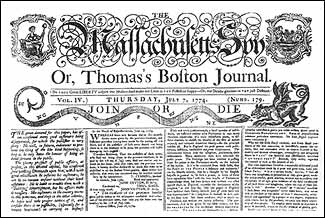
Revere's rattlesnake masthead
[Paul Revere's modified "Join or Die" snake from the masthead
of Thomas's Boston Journal, July 7, 1774. Newspaper Serial
and Government Publications Division, Library of Congress.]

The birth of the U.S. Navy and the U.S. Marine Corps


Georgia $20 bill
[The seal from a 1778 $20 bill from Georgia. The financial backing for these bills was property seized from loyalists. The motto reads "Nemo me impune lacesset," i.e. "No one will provoke me with impunity."]
By 1775, the snake symbol wasn't just being printed in newspapers. It was appearing all over the colonies ... on uniform buttons ... on paper money ... and of course, on banners and flags.
The snake symbol morphed quite a bit during its rapid, widespread adoption. It wasn't cut up into pieces anymore. And it was usually shown as an American timber rattlesnake, not a generic serpent.
We don't know for certain where, when, or by whom the familiar coiled rattlesnake was first used with the warning "Don't Tread on Me."
We do know when it first entered the history books.
In the fall of 1775, the British were occupying Boston and the young Continental Army was holed up in Cambridge, woefully short on arms and ammunition. At the Battle of Bunker Hill, Washington's troops had been so low on gunpowder that they were ordered "not to fire until you see the whites of their eyes."
In October, a merchant ship called The Black Prince returned to Philadelphia from a voyage to England. On board were private letters to the Second Continental Congress that informed them that the British government was sending two ships to America loaded with arms and gunpowder for the British troops.
Congress decided that General Washington needed those arms more than General Howe. A plan was hatched to capture the British cargo ships. They authorized the creation of a Continental Navy, starting with four ships. The frigate that carried the information from England, the Black Prince, was one of the four. It was purchased, converted to a man-of-war, and renamed the Alfred.
To accompany the Navy on their first mission, Congress also authorized the mustering of five companies of Marines. The Alfred and its sailors and marines went on to achieve some of the most notable victories of the American Revolution. But that's not the story we're interested in here.
What's particularly interesting for us is that some of the Marines that enlisted that month in Philadelphia were carrying drums painted yellow, emblazoned with a fierce rattlesnake, coiled and ready to strike, with thirteen rattles, and sporting the motto "Don't Tread on Me."

Benjamin Franklin diverts an idle hour
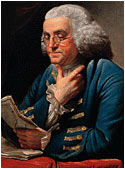

Franklin portrait
[Benjamin Franklin, portrait by David Martin, 1767. White House Historical Association.]
In December 1775, "An American Guesser" anonymously wrote to the Pennsylvania Journal:

"I observed on one of the drums belonging to the marines now raising, there was painted a Rattle-Snake, with this modest motto under it, 'Don't tread on me.' As I know it is the custom to have some device on the arms of every country, I supposed this may have been intended for the arms of America."
This anonymous writer, having "nothing to do with public affairs" and "in order to divert an idle hour," speculated on why a snake might be chosen as a symbol for America.
First, it occurred to him that "the Rattle-Snake is found in no other quarter of the world besides America."
The rattlesnake also has sharp eyes, and "may therefore be esteemed an emblem of vigilance." Furthermore,

"She never begins an attack, nor, when once engaged, ever surrenders: She is therefore an emblem of magnanimity and true courage. ... she never wounds 'till she has generously given notice, even to her enemy, and cautioned him against the danger of treading on her."
Finally,

"I confess I was wholly at a loss what to make of the rattles, 'till I went back and counted them and found them just thirteen, exactly the number of the Colonies united in America; and I recollected too that this was the only part of the Snake which increased in numbers. ...

"'Tis curious and amazing to observe how distinct and independent of each other the rattles of this animal are, and yet how firmly they are united together, so as never to be separated but by breaking them to pieces. One of those rattles singly, is incapable of producing sound, but the ringing of thirteen together, is sufficient to alarm the boldest man living."
Many scholars now agree that this "American Guesser" was Benjamin Franklin.

Wednesday, November 10, 2010

Classroom Motivations

Once upon a time when Jacob went to the regular public school up the road, he was given a clip on a chart where they would track when a child would have discipline problems
I have decided that it might be more helpful to do the opposite and not focus so much on the "don't" and focus more on the "do" and reinforce good behavior
I use to use just a yard stick that was painted with clips, but found a chart and have repurposed it as my "We are all good apples" chart.
So I have the apple tree and as my kids are found doing good things during the day, we put an apple on the tree....at the end of the week if our tree is full of apples, they can get a treat from the treasure box(a small piece of candy, a sticker, or some other small prize)
So far it has worked for us and created more opportunities to want to do good rather than just avoiding misbehavior.
We are all good apples!


Saturday, October 2, 2010

Our True Identity


Just some encouraging words from one of my favorites.....just remember in those trying moments that we are all swans.